Mimin Satu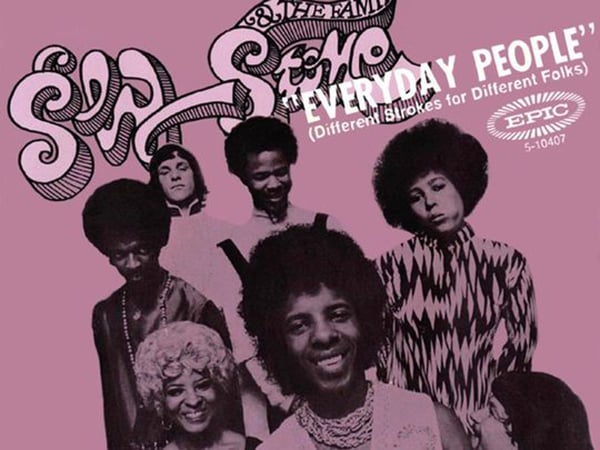
Sly Stone: The Funk Pioneer Who Changed the Sound of a Generation
When we talk about influential figures in American music, Sly Stone is a name that deserves to be mentioned with the highest respect. As the frontman of Sly and the Family Stone, he was more than just a musician—he was a cultural force who helped shape the sound of the late 1960s and 1970s. With his revolutionary approach to music, Sly Stone broke boundaries of genre, race, and performance, leaving a legacy that continues to inspire artists to this day.
A Musical Prodigy from the Start
Born Sylvester Stewart on March 15, 1943, in Denton, Texas, and raised in Vallejo, California, Sly was immersed in music from a young age. He grew up in a religious household where gospel music was a daily presence. But it didn’t take long for him to explore beyond the church and dive into R&B, soul, rock, and jazz.
Sly was a multi-instrumentalist who could play the guitar, bass, keyboards, and drums with ease. His early career included producing records for other artists and working as a radio DJ—roles that helped him hone his skills in sound mixing and genre fusion.
The Birth of Sly and the Family Stone
In 1966, Sly formed Sly and the Family Stone, a band that would soon redefine American pop music. What made this group stand out wasn’t just their electrifying sound—it was also their makeup. At a time when America was still grappling with segregation and racial inequality, the Family Stone was proudly integrated: black and white members, men and women, all sharing the stage as equals. This in itself was a statement.
Musically, the band was a revelation. They blended funk, soul, rock, and psychedelia into a sound that was entirely their own. With hits like “Dance to the Music,” “Everyday People,” and “Thank You (Falettinme Be Mice Elf Agin),” they brought danceable rhythms and socially conscious lyrics to the mainstream.
Innovation and Impact
Sly Stone wasn’t just about catchy tunes—he was an innovator. He pioneered the use of slap bass, layered vocals, and syncopated rhythms that would become trademarks of the funk genre. His 1971 album, There’s a Riot Goin’ On, marked a turning point. Darker and more introspective than his previous work, the album reflected the turbulent political and social climate of the early ’70s. Its raw, lo-fi production was unconventional at the time, but it laid the groundwork for future styles in funk, hip-hop, and even lo-fi indie music.
Artists across genres have cited Sly Stone as a major influence. Prince, George Clinton, Lenny Kravitz, and countless hip-hop producers owe a debt to Sly’s trailblazing sound and fearless creativity.
Struggles Behind the Spotlight
Despite his artistic brilliance, Sly Stone faced serious personal challenges. Fame, pressure, and substance abuse took a toll on his mental health and career. By the late 1970s, his public appearances became rare, and eventually, he faded from the music scene almost entirely.
In later years, Sly’s life took a difficult turn. Reports of financial hardship and reclusive living saddened many fans. Still, the music community never forgot his contribution. In 1993, Sly and the Family Stone were inducted into the Rock and Roll Hall of Fame, a fitting tribute to their enduring influence.
A Lasting Legacy
Sly Stone may not have remained in the spotlight, but his impact on music is timeless. His fearless blending of genres, his message of unity and equality, and his revolutionary sound continue to echo in today’s music—from funk and soul to hip-hop and electronic.
In recent years, there’s been renewed interest in his life and work, with documentaries and biographies shedding light on the genius behind the grooves. For young artists and fans alike, Sly’s story serves as both inspiration and cautionary tale—a reminder of how powerful music can be, and how human even the brightest stars truly are.
-Karina Ramadina-